For nearly a decade, I have found stories of soldiers and revolutionary war among the most challenging yet compelling subjects. They bring history to life, evoking joy and sorrow, triumph and loss, while helping younger generations reflect on peace.
For nearly a decade, I have found stories of soldiers and revolutionary war among the most challenging yet compelling subjects. They bring history to life, evoking joy and sorrow, triumph and loss, while helping younger generations reflect on peace.
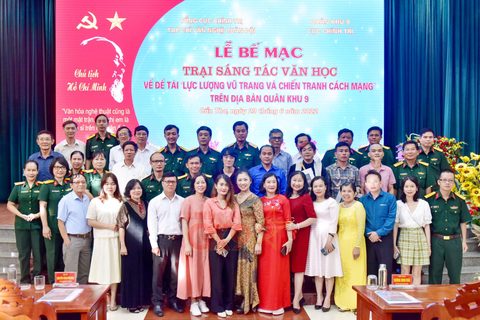
Writers attend the Military Literature Magazine writing camp in Military Region 9.
Recently, writer Tram Huong gave me her epic poem Hoa cua nuoc (Flowers of the Nation), which portrays the hardship and courage of female martyrs and Vietnamese Heroic Mothers. Many mothers lost their daughters and children, yet wiped away their tears, served as couriers, took up arms and devoted themselves to the country’s peace.
Writing about war and soldiers requires more than archival research. A misplaced word or detail can betray history and those who came before us. Tram Huong spent 10 years travelling to remote areas and tracing her characters’ lives for material.
Time is running short. War witnesses are growing fewer, and memories may fade. Yet fewer young writers are taking up the subject. Born after the war, many lack a direct connection to its realities.
More writing camps, meetings with veterans and cooperation among cultural and publishing institutions could help bridge this gap. Though war literature is an old subject, it still demands depth and honesty. New generations can bring fresh perspectives and keep these stories alive in the nation’s memory.
Translated by DO HUONG